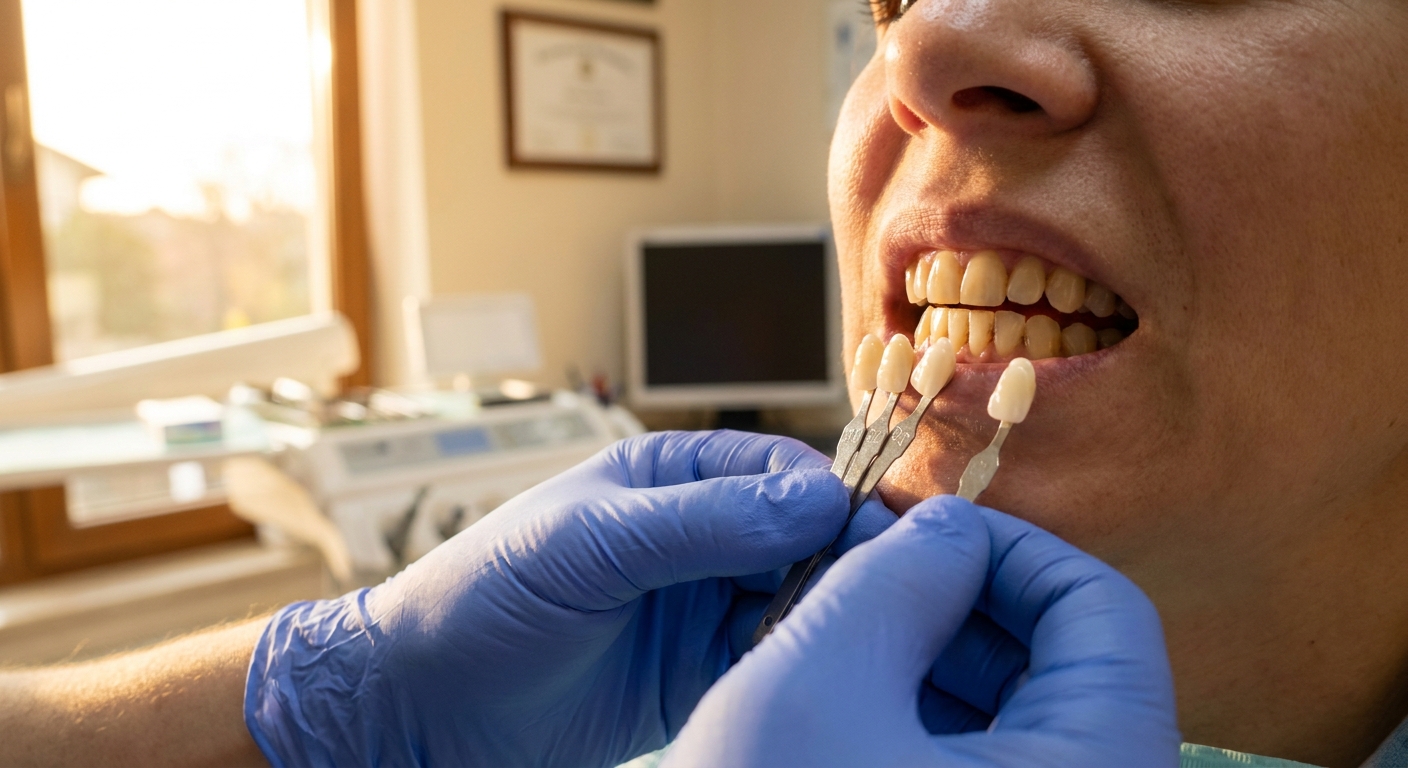
You’ve decided whitening is worth trying, and now you’re reading the fine print on every product page and permission form, looking for the part no one wants to talk about. The truth Gaston Dental Associates wants you to know is, teeth whitening does come with downsides, temporary sensitivity, uneven results if your enamel isn’t uniform, and the risk of gum irritation if the bleaching gel sits where it shouldn’t. None of these are reasons to walk away, but they are reasons to choose carefully and go in with your eyes open.
The honest list is short: whitening can cause temporary sensitivity and gum irritation, overuse can harm enamel, some stains won’t respond to peroxide, and every result fades over time. Each downside costs you something, either in comfort or in money spent on a treatment that never had a chance of working. This guide walks through each one so you can decide with the full picture, not just the sales pitch. If you’re still comparing products and methods, our guide to teeth whitening tips and options is a helpful companion to this one.
Why Do Teeth Get Sensitive After Whitening, and How Long Does It Last?
Sensitivity is a common experience with whitening, and for many people it fades within 24 to 72 hours. It happens because peroxide passes through your enamel and reaches the dentin underneath. Dentin is full of microscopic tubules that lead toward the nerve, so cold air, ice water, or even breathing through your mouth can feel sharp for a day or two.
A review of the research in Tooth Whitening: What We Now Know names tooth sensitivity and gum irritation as two side effects people report often. Many people describe it as a quick “zing” rather than a steady ache. The feeling usually peaks during or just after treatment and then settles as your teeth recover.
How the gel reaches your teeth makes a real difference. Over-the-counter strips are cut for an average arch, so on a mouth with crowded teeth, a deep curve, or uneven edges, they sit unevenly. The gel pools in some spots and barely touches others, and the pooled areas get a heavier dose of peroxide. Those are often the teeth that hurt. Professional whitening controls both the peroxide strength and where the gel sits, and custom-fitted trays hold a thin, even layer against each tooth so no single spot gets overloaded.
You can also lower the odds before you start. Many dentists suggest brushing with a desensitizing toothpaste for about a week before whitening. If you already wince at cold drinks, say so at your consultation. That history helps a dental team plan shorter sessions, a gentler concentration, or a take-home schedule with breaks built in. If pain ever feels severe or lasts longer than a few days, stop and call your dentist rather than pushing through it. Gaston Dental Associates offers emergency dental care, so you don’t have to wait it out alone if something feels wrong.
Why Your Gums Burn With Some Kits and Not in the Dental Chair
Sensitivity isn’t the only discomfort people notice, and the second one is easier to prevent. Gum irritation happens when whitening gel touches the soft tissue around your teeth, and it can leave your gums white, tender, or stinging for a day or two. Professional whitening can reduce this risk by keeping the gel on your teeth and away from your gums, which is very hard to do with one-size-fits-all products.
Peroxide is strong enough to lift stains from enamel, so it’s no surprise it can irritate the thinner tissue of your gums. With drugstore strips, the gel often slides past the gumline as the strip shifts while you talk, swallow, or move your lips. Trays sold in a box have the same problem: a generic tray is molded for nobody in particular, so gaps form and gel leaks onto tissue that was never meant to be whitened.
In a dental office, gums are commonly shielded before stronger in-office gel goes on, and trays made from your own teeth keep gel from seeping out around the edges. A store kit can’t match that, because it has never seen your mouth. At your consultation, it’s worth asking exactly how your gums will be protected. This is one place where gentle care and personalized care are practical, not just nice words, since the fit of the tray decides how your gums feel that evening.
Here is a simple example. If you have one tooth that sits slightly forward, a strip will press against it and bow away from the teeth next to it, and gel collects in that gap and touches your gums. A custom tray follows that tooth’s exact position, so the gel stays put. The American Dental Association notes that whitening too often raises the risk of gum irritation and other problems, which is another reason fit and frequency both matter. Mild irritation usually clears on its own, but tell your dentist if it lingers or keeps coming back.
Does Whitening Damage Enamel? The Truth About Overuse and Supervision
Whitening used as directed, with a dentist guiding the process, appears safe for enamel in the dental research to date. The real risk comes from overuse: wearing gel longer than directed, whitening too often, or stacking several products at once. That pattern can lead to enamel wear and edges that look see-through.
The research review in Tooth Whitening: What We Now Know concludes that whitening is relatively safe when people use it properly. The words “when used properly” carry a lot of weight, because problems tend to show up when someone treats whitening like a daily habit instead of a treatment with limits.
Overuse often looks like this. You whiten, and the result looks good for a while. Then you notice a little yellow coming back, so you start another round, then another, because your teeth never look quite white enough. Over months, the biting edges of your front teeth can start to look gray or glassy. That translucency is a sign of thinning enamel, and enamel does not grow back. The ADA’s guidance on the risks of frequent teeth whitening describes this kind of overuse as a real concern.
Do-it-yourself trends add another layer of risk. The University of Rochester Medical Center warns that some popular at-home whitening methods can do more harm than good, especially abrasive powders and acidic mixtures that scrub or dissolve enamel. Supervision acts as a ceiling: your dentist sets how long you wear the gel, how often you repeat it, and when your teeth have reached a healthy stopping point. Sometimes the best advice is simply “you’re done,” and an honest dentist will tell you so.
Who Should Not Whiten: The Candidacy Question No One Asks Until After They’ve Paid
Even well-supervised whitening can disappoint if your teeth aren’t good candidates. Whitening often works well on yellowish stains from coffee, tea, wine, tobacco, and aging. It may work less well on grayish stains from tetracycline antibiotics or on a tooth darkened by injury. Cavities and gum disease also need treatment first, because peroxide on an untreated cavity can cause severe pain.
The difference comes down to where the stain lives. The ADA explains that discoloration can sit on the surface of the tooth or deep inside it. Surface stains from your morning coffee may respond to peroxide. Stains built into the tooth’s structure, like the gray bands left by certain antibiotics taken in childhood, are much harder to lift. A single tooth that turned dark after a fall or a sports injury often changes color from the inside, and surface whitening usually can’t reach that kind of stain.
This matters for your wallet. If your discoloration is the gray, banded kind, a $99 deal is $99 spent on a result that was never going to happen. A dentist can usually tell the difference by looking closely during an exam, before you pay for anything. When whitening isn’t the right tool, other cosmetic options may be the better path. Because Gaston Dental Associates provides cosmetic dentistry, you can talk through those alternatives in the same office instead of starting over somewhere else.
Existing dental work matters too. Crowns, fillings, veneers, and bonding do not whiten, so if you have a crown on a front tooth, whitening the teeth around it can make the crown look darker by comparison. Gum recession is another factor, because exposed roots don’t whiten the way enamel does and they tend to be extra sensitive. Peroxide reaching an open cavity or inflamed gums can hurt badly, which is why an exam always comes before whitening, never after.
Is Professional Whitening Worth the Cost If the Results Fade?
Whitening is not permanent, so the fair way to judge cost is by price per year of results, not the price on the receipt. Professional results may last about one to three years in some patients, depending on habits and aftercare. Drugstore strips often fade within a few months, so the cheaper box rarely stays cheap.
Here is the honest math, using example prices. Suppose a $600 in-office treatment holds up for two years in one patient’s experience, which works out to about $300 per year. A $40 box of strips that lasts three months, repeated four times a year, costs about $160 per year. On paper, the strips win, and most cost articles stop there or skip the math entirely. But the strip number leaves out what you trade for it. You may face sensitivity and gum irritation risk four times a year instead of once, you may get uneven results on crowded or curved teeth, and you may see a smaller shade change each round. If you have the gray-type stains described above, you may spend the $160 and see no change at all.
Asking whether there’s a downside to teeth whitening is really asking what you’re willing to trade, and for some patients a visible, even result they only pay for every year or two is worth the higher upfront price.
| Option | Typical upfront price | How long results may last | Example cost per year |
|---|---|---|---|
| In-office professional whitening | $300 to $1,000 | May be about 1 to 3 years | A $600 visit lasting 2 years: about $300 |
| Dentist-supervised take-home trays | $150 to $500 | Varies; trays can be reused for touch-ups | Depends on your touch-up schedule |
| Over-the-counter strips and gels | $5 to $100 | Often a few months | A $40 box every 3 months: about $160 |
Results vary from person to person, and these are typical ranges you may see while shopping around, not quotes. The main methods break down like this:
- In-office whitening: A stronger gel applied by the dental team while your gums are protected. Some systems use a light, sometimes marketed as “laser” whitening. This is one route to a noticeable change in one visit.
- Custom take-home trays: Trays made from impressions of your teeth, with professional gel you wear on a set schedule. Results come more slowly, but the trays can be reused for touch-ups.
- Over-the-counter strips: The lowest upfront price, with lower-strength gel and a one-size fit that can leave gaps.
- Store-bought gels, pens, and generic trays: Easy to buy, but the fit and strength vary widely.
- Whitening toothpaste: May help with surface stains and upkeep, but it won’t change your natural shade much.
Your final price depends on a few factors:
- Your starting shade and stain type: Deep or stubborn stains may need more sessions.
- The method you choose: In-office, take-home, or a combination of both.
- Number of sessions: Some patients reach their goal in one visit, while others need follow-up rounds.
- The technology used: Light-activated systems and custom trays carry different costs.
- Where you live and which practice you choose: Prices differ by market and by office.
- Treatment you need first: A cavity or gum problem has to be handled before whitening begins.
What Happens During a Whitening Consultation in Gastonia?
Once you understand the trade-offs, the next step is finding out how they apply to your own teeth. A whitening conversation at Gaston Dental Associates starts with an exam. The team checks for cavities, gum disease, worn enamel, and existing dental work, then works out whether your stains may respond to peroxide or would be better served by another cosmetic option. The goal is whitening that is both safe and worth your money.
The exam comes first because it protects you. If a cavity turns up, it can be treated before any peroxide touches it. If your gums are inflamed, a cleaning comes first. Because Gaston Dental Associates offers routine checkups and cleanings, preventive care, restorative dentistry, and cosmetic dentistry in one location, you won’t be sent to another office to clear the way. The same team that finds the problem can fix it, then plan your whitening around it. That one-location approach is also handy if you’re booking for the whole family, since checkups for the kids and your own care can happen in the same place.
Next comes the conversation that drugstore kits never have with you. You’ll talk about your sensitivity history, any crowns or fillings on your front teeth, and how white you actually want to go. It’s reasonable to ask what shade change may be realistic for your teeth so your expectations match the result. Then the Gaston Dental Associates team can match an option to your goals and budget. If dental visits make you nervous, you’re not alone: the practice gives anxious patients special care, and you can ask as many questions as you need without feeling rushed.
How much does teeth whitening cost in Gastonia, NC? The ranges in the table above are typical market ranges, not Gaston Dental Associates quotes. Your exact price depends on the method you choose and what your exam finds, so before you commit, ask for the full price, including any touch-up gel or follow-up visits.
Does dental insurance cover teeth whitening? Most dental plans treat whitening as cosmetic, so it usually isn’t included in your benefits. The exam and cleaning that come before whitening are a different story, since your plan’s preventive benefits may apply to them. Gaston Dental Associates accepts Humana, Cigna, Anthem, Aetna, United Healthcare, and Delta Dental, and the front desk can help you check what your plan pays so you know what you’ll owe. The practice serves patients from Gastonia, Dallas, Lowell, Belmont, and Cramerton.
Is There a Downside to Teeth Whitening? Answers to What People Ask Next
The short answer is yes, but the downsides are often temporary and manageable with professional guidance. Here are direct answers to the questions people usually ask once they start weighing the trade-offs.
How long does tooth sensitivity last after whitening?
For many people, sensitivity lasts about 24 to 72 hours and then fades. Using a desensitizing toothpaste for about a week before treatment may help. If your teeth already react to cold, tell your dentist so the plan can include a gentler concentration or shorter sessions.
Can teeth whitening damage your enamel?
Not when you use it as directed under a dentist’s guidance. The risk comes from overuse, such as wearing gel too long, whitening too often, or combining products. Over time, overuse can wear enamel and make the biting edges look translucent, and that damage is permanent.
Does teeth whitening work on all types of stains?
No. Yellowish stains from coffee, tea, and aging may respond well. Grayish stains from tetracycline antibiotics, or a single tooth darkened by injury, may respond poorly. A dentist can usually tell which type you have during an exam, before you spend money on a method that won’t work.
Is professional teeth whitening worth the cost compared to drugstore kits?
It depends on what you count. Strips can cost less per year on paper, but you repeat them often, may accept more sensitivity and gum irritation risk, and may get uneven results. Professional whitening may last one to three years and comes with an exam that confirms whitening will work for your teeth.
Can you whiten your teeth if you have cavities or gum disease?
Not until those problems are treated. Peroxide on an untreated cavity can cause severe pain, and inflamed gums react badly to whitening gel. Treating these issues first keeps you comfortable and helps your teeth whiten evenly.
Find Out If Whitening Fits Your Teeth and Budget Before You Pay
A significant downside of teeth whitening isn’t the sensitivity or the fading. It’s paying for a treatment your teeth were never going to respond to, or finding out about a cavity the hard way, halfway through a kit. Both problems can be avoided with one visit.
Schedule a visit at Gaston Dental Associates in Gastonia to find out if you’re a good candidate and which treatment fits your goals and budget. Before you come in, take a moment to note two things: any crowns, fillings, or bonding on your front teeth, and whether cold drinks already make you wince. Those two details shape your plan more than almost anything else, because they help the team decide whether whitening or another cosmetic option may give you the result you’re after. You’ll leave knowing your stain type, your options, and what each one would cost, so the decision is yours to make without pressure.
Ready to brighten your smile the right way?
If you’re weighing the benefits and potential sensitivity of whitening, a conversation with our team can help you understand what to expect for your specific teeth. We’ll walk you through options that match your comfort level and goals. Gaston Dental Associates is here to answer your questions and help you move forward with confidence.
This article is for general education and isn’t a substitute for an exam. Whitening results vary based on stain type, oral health, and aftercare.