You’ve asked the hygienist, scrolled through product reviews at midnight, and maybe even zoomed in on old photos to figure out when the yellowing started. The question, as Gaston Dental Associates sees it, isn’t really whether yellow teeth can be white again, it’s whether yours will respond the way you hope, and whether the method you choose will actually match the cause sitting in your mouth right now.
This guide walks you through that decision. You will see the price ranges for each whitening method and learn how to compare them by cost per year instead of the price on the box. You will also learn when whitening may not work, and how Gaston Dental Associates helps patients from Gastonia, Dallas, Lowell, Belmont, and Cramerton pick the right option for their budget before spending anything.
Can Yellow Teeth Be White Again? In Many Cases Yes, but the Cause of the Stain Decides What May Work
Yellow teeth can often be whitened. The method that may work depends on whether the color sits on the surface of your teeth or inside them.
Dentists sort discoloration into two groups. Extrinsic stains sit on the outer layer of enamel and come from coffee, tea, red wine, dark sodas, and tobacco. Intrinsic stains sit inside the tooth. They can come from certain medications taken while teeth were forming (tetracycline is the classic example), too much fluoride in early childhood, or an injury to a tooth. Researchers at Tufts University’s dental school explain these causes and note that age plays a role too. As enamel wears thinner over the years, more of the naturally yellow layer underneath, called dentin, shows through.
If your concern is yellow, here is the encouraging part. The American Dental Association notes that whitening does not correct every kind of discoloration. Yellowish teeth may respond to bleaching, brownish teeth may respond less, and grayish teeth may not respond much at all. Yellow from coffee, tea, and age is often a candidate for improvement.
Picture two different people. One drinks two cups of coffee a day and has noticed an even, all-over yellowing. Various whitening methods may lighten their teeth to some degree, and professional gel may do it faster and more noticeably. The other has one front tooth that turned dark after a fall years ago. Whitening gel may barely change that tooth, and a cosmetic or restorative solution could be a better option. Because Gaston Dental Associates provides both cosmetic and restorative dentistry in one convenient location, the team can recommend what may fit your teeth instead of steering you toward one product.
How Much Does Teeth Whitening Cost in Gastonia NC, and What Are You Really Paying For?
At Gaston Dental Associates, a consultation reveals the exact cost for your situation. Across the region, practices generally charge anywhere from several hundred to several thousand dollars for professional office whitening, while take-home trays from a dentist fall into a middle range, and drugstore products run about $5 to $100. Those price differences reflect different gel strengths, how fast results appear, and whether a dental professional supervises the process.
That order matters, because a price quoted over the phone cannot account for your stain type, your starting shade, or whether a cavity needs attention first. Here is how the main options compare:
| Whitening option | Typical cost range | Gel strength | How fast you may see change | May be appropriate for |
|---|---|---|---|---|
| In-office professional whitening | Several hundred to over a thousand dollars | Highest, applied by the dental team | Often within one visit | An upcoming event, or deeper yellowing |
| Take-home custom trays from a dentist | Mid-range professional option | Moderate, prescribed by the dentist | Gradual, over about 1 to 2 weeks | Sensitive teeth, or a slower, steady pace |
| Drugstore strips, gels, and paint-ons | $5 to $100 | Lowest available without a dentist | Slow, with a lower ceiling | Light surface stains on healthy teeth |
| Whitening toothpaste | Low end of the drugstore range | Mostly polish, little or no bleach | Surface stain only | Maintaining results after other whitening |
Most of the price difference comes from the strength of the gel. A review published in the Journal of Evidence-Based Dental Practice describes in-office whitening gels at 25% to 40% hydrogen peroxide, applied with the gums protected. Take-home trays from a dentist use a lower strength, usually carbamide peroxide, worn over several days, and drugstore products are weaker still. In other words, you are paying for a stronger gel used safely, a tray that fits your teeth, and a dental team watching for problems.
Here is how each method works and who it may suit:
- In-office whitening (top tier): The dental team protects your gums and applies strong gel while you sit in the chair. This is often the fastest route and may be a good choice if you have a wedding, graduation, or job interview coming up. At Gaston Dental Associates, that appointment includes attention to your gum line, monitoring throughout, and a chance to stop if anything feels uncomfortable.
- Light-activated in-office systems (usually the top of the in-office range): Some offices pair the gel with a special light and call it laser whitening. Ask what the light adds for your teeth before you pay extra for it.
- Custom take-home trays (middle tier): The trays are made from impressions of your teeth, so the gel stays on your teeth and off your gums. You set the pace, and you keep the trays for future touch-ups.
- Drugstore strips and gels ($5 to $100): One-size strips are inexpensive and easy to find. They may brighten surface stains, but results tend to plateau and the strips may not reach every tooth evenly.
- Whitening toothpaste (a few dollars): This helps remove new surface stains, but it does not meaningfully change the color underneath, so it may work for maintenance.
For more on everyday habits and product types, see our guide to teeth whitening tips and options.
Is Professional Whitening Worth Paying More For? Count the Years, Not the Box
For some people, yes. Once you compare the cost per year of results instead of the price at the register, the gap between a dentist’s treatment and drugstore products gets smaller, while the difference in results can remain notable.
Start with the drugstore math. Say you buy a $30 box of strips. Your teeth may look a little brighter for a while, and then coffee and time can pull them back. If you buy another box two to four times a year, you spend $60 to $120 a year. Each round may start close to where you began, and the result tends to stop at the same modest level because the gel cannot go any further. Add up the kits you have bought over the past few years, including the half-used ones, and the total may surprise you.
Now look at a professional option. These figures are an example, not a quote. Imagine you pay $600 for professional whitening, and with good habits and occasional touch-ups the results hold for two years. That works out to $300 a year, and if they last three years, it comes to $200 a year. With take-home trays, you also keep the trays, so a touch-up later means buying more gel rather than starting over. How long results last varies with your diet, whether you smoke, and how well you care for your teeth, so think of these numbers as a way to compare, not a promise.
There is a second way to judge value: what you pay for each visible change. A $30 kit that barely moves your shade has a high cost for the result you can actually see in the mirror. A professional treatment that may produce a clear difference you are comfortable with can cost less per real improvement, even though the first payment is larger.
That does not mean drugstore products are always the wrong choice. If your teeth are healthy, the stains are mild, and a small change is all you want, a low-cost product may be enough. The point is to choose on purpose. Keep in mind that whitening over an untreated cavity or exposed root can sting, and no bleach will fix decay. A routine checkup first, which many plans cover, can save you from paying for a product that hurts or simply does not work for your situation.
Are You a Good Candidate for Whitening, or Does Something Need Attention First?
Many adults with healthy natural teeth may be good candidates for whitening. However, untreated cavities, gum disease, and front teeth with crowns, veneers, or large fillings all need a dentist’s look before you start.
The most common surprise involves dental work. The ADA explains that whitening does not change the color of caps, crowns, veneers, or fillings, because gel lightens natural enamel only. If you have a crown on a front tooth that matched your teeth when it was placed, whitening the teeth around it can leave that crown looking darker than its neighbors. One person we treated decided to have the crown replaced afterward so everything matched. That is fine, as long as you know about it and plan for it before you whiten, not after.
Gum health matters too. If your gums are swollen or bleed easily, whitening gel can irritate them, and the underlying gum problem still needs care. Exposed roots from gum recession do not whiten the way enamel does, and they are often more sensitive. Cavities are another reason to wait, because peroxide reaching a weak spot in a tooth can cause discomfort.
This is where having comprehensive services in one convenient location helps. Gaston Dental Associates provides routine checkups and cleanings, preventive care, restorative dentistry, and emergency dental care alongside cosmetic treatment. If your exam finds a small cavity or gum inflammation, the same team can take care of it and then plan your whitening, so you are not sent across town to start over somewhere new. That convenience extends to your whole family. The goal is a result you can feel comfortable with, done in the right order, with gentle care at every step.
How Does Gaston Dental Associates Figure Out the Right Method and Price for You?
At Gaston Dental Associates, the price comes after the exam, not before. The team needs to see your stain type, your current shade, and your oral health before recommending a method and giving you a number you can count on.
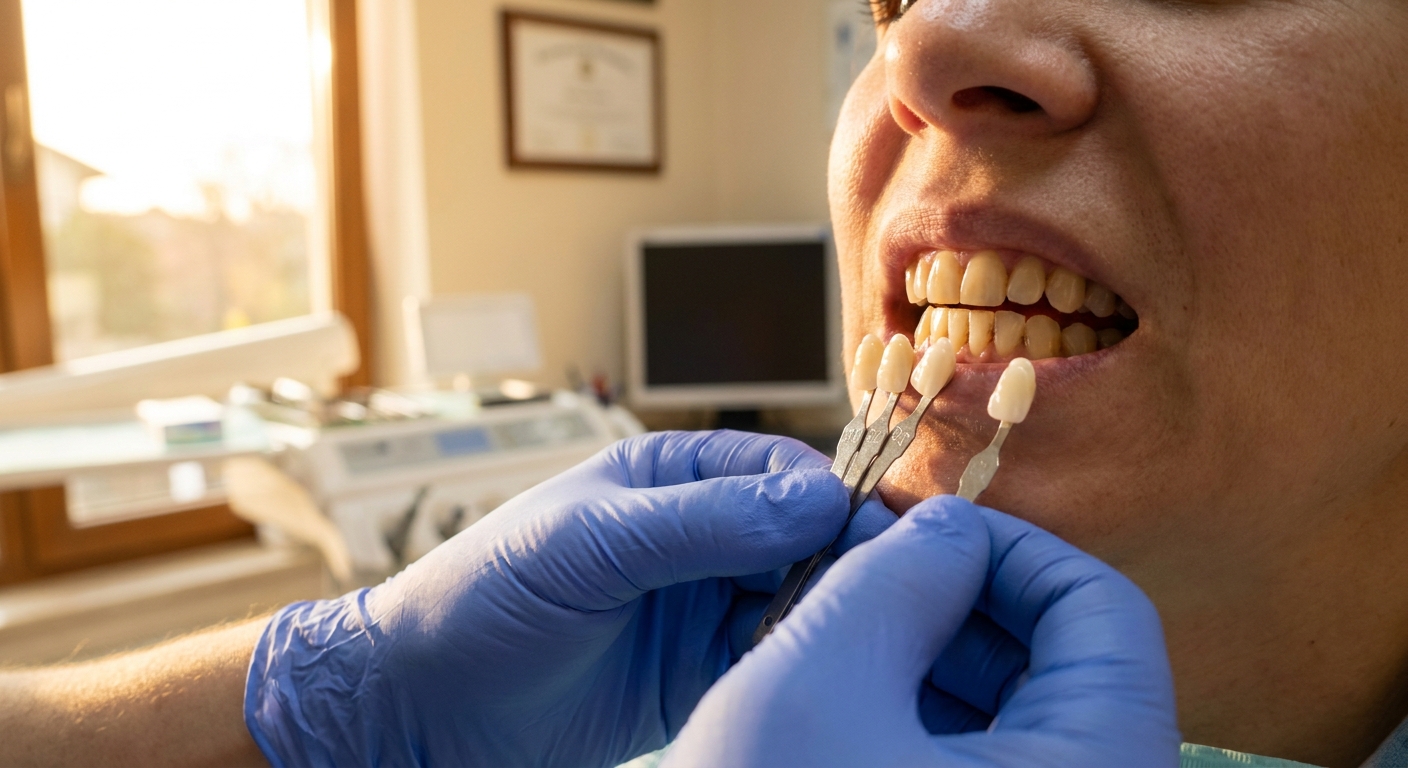
During your consultation at the Gaston Dental Associates practice in Gastonia, the team looks at what may be causing your yellowing, checks your current shade, reviews any crowns, veneers, or fillings on your front teeth, and checks for cavities or gum concerns. Then you talk through your goals and your timeline. If you have an event in three weeks, that shapes the advice. If your teeth are already sensitive to cold drinks, a slower, gentler approach may suit you better. This is personalized care, not a sales pitch, and if a drugstore product might honestly meet your goals, you’ll hear that too.
Several things affect your final cost:
- Your stain type: Surface yellowing may respond faster than deeper, intrinsic discoloration.
- Your starting shade and your goal: A bigger change can take more sessions or more days of tray wear.
- The method you choose: In-office treatment generally costs more than take-home trays.
- Number of sessions: Some people reach their goal in one visit, while others need a follow-up.
- Custom tray fabrication: Trays made to fit your teeth are part of the take-home cost and can be reused for touch-ups.
- Prep work: A cleaning or a filling before whitening is billed separately from whitening.
- Touch-up plan: Future gel refills add a smaller cost over time.
You may also be wondering whether dental insurance covers teeth whitening. In most cases it does not, because insurers classify whitening as cosmetic. Insurance can still help with the care that sometimes comes first, though. Gaston Dental Associates accepts Aetna, Anthem, Cigna, Delta Dental, Humana, and United Healthcare for eligible services such as exams, cleanings, and fillings, and your plan’s benefits determine what is covered. For the whitening itself, ask the front desk about current payment options. You deserve to know your full cost before you agree to anything, and the team is glad to walk you through it with comfort and respect, never pressure.
What Will Whitening Feel Like, and How Do You Keep Your Results?
In-office whitening is often finished in one appointment, while take-home trays are typically worn daily for about one to two weeks. With either method, temporary sensitivity is the most common side effect.
During an in-office visit, the Gaston Dental Associates team protects your gums and lips, applies the gel in timed rounds, and checks on you throughout, so you can relax in the chair. If you tend to feel anxious at the dentist, say so. Gaston Dental Associates places special emphasis on comfort and respect for anxious patients, and you can ask for breaks or ask what is happening at any point. With take-home trays, you wear the gel for the time your dentist recommends each day. The advantage is control: if your teeth feel sensitive, you can skip a day or shorten your wear time and pick back up when you feel ready.
As for sensitivity, the review in the Journal of Evidence-Based Dental Practice identifies it as the most common side effect of peroxide whitening and notes that it is generally temporary. In practice, you may notice brief zings with cold drinks for a few days. Using a toothpaste made for sensitive teeth before and during whitening, and keeping trays in for shorter periods, can make a difference. If sensitivity feels sharp or lasts longer than expected, call the Gaston Dental Associates practice instead of pushing through.
Once your teeth are brighter, keeping them that way comes down to habits and touch-ups. Many dentists suggest going easy on coffee, tea, red wine, and tobacco for the first couple of days, when teeth may pick up stains more easily. After that, rinsing with water after dark drinks, brushing twice daily, and keeping your routine cleanings all help. If you have custom trays, a short round of touch-up gel every so often can refresh your shade without starting from scratch. That is where the cost-per-year math pays off, because maintaining a shade costs far less than rebuilding it.
What Else Do Gastonia Patients Ask Before They Whiten?
Most last-minute questions come down to cost, timing, and whether whitening will work on your specific teeth. Here are straight answers to the ones that come up most often.
Can yellow teeth become white again naturally?
Better brushing, cutting back on coffee and tea, and regular professional cleanings can remove surface stains and make teeth look brighter. Changing the shade of the tooth itself takes peroxide. Be cautious with acidic home remedies such as lemon juice, which can wear down enamel and make yellowing look worse over time.
How much does professional teeth whitening cost in Gastonia NC?
At Gaston Dental Associates, the exact price comes after your consultation. Across the region, professional in-office whitening generally ranges from several hundred to over a thousand dollars, with take-home trays falling into a middle tier. The Gaston Dental Associates team gives you a firm number once they have examined your teeth and discussed your goals.
Does dental insurance cover teeth whitening?
Usually not. Insurers treat whitening as cosmetic, so it is rarely covered, but your plan may still help with an exam, cleaning, or filling you need before whitening. Gaston Dental Associates accepts Aetna, Anthem, Cigna, Delta Dental, Humana, and United Healthcare for eligible services, and the front desk can explain payment options for whitening.
How long do professional whitening results last?
Whitening is not permanent. How long it lasts depends on what you eat and drink, whether you smoke, and how often you touch up. Professional results may fade more slowly than lighter drugstore results, and touch-ups with custom trays can extend them.
What causes teeth to turn yellow?
Surface stains from coffee, tea, red wine, and tobacco are common causes. Age adds to it as enamel thins and the yellow dentin underneath shows through. Deeper stains can come from certain childhood medications, excess fluoride, or an injury to a tooth.
Will whitening work if I have crowns or veneers on my front teeth?
No. Whitening gel lightens natural enamel only, so crowns, veneers, and fillings keep their original color. If they stand out after whitening, replacing them to match is an option to discuss during your consultation at Gaston Dental Associates.
Find Out What Your Yellow Really Is Before You Buy Another Kit
So, can yellow teeth be white again? For many people the answer is yes, but the right method depends on what is causing the color. Whether you live in Gastonia, Dallas, Lowell, Belmont, or Cramerton, schedule a whitening consultation at Gaston Dental Associates to learn what type of staining you have, which method may work for your teeth, and the exact cost before you spend money on a product that might not deliver.
Here is one thing you can do tonight: look at your teeth in good daylight and notice whether the yellow looks even across every tooth or darker on one or two. Bring that observation to your visit to Gaston Dental Associates. It’s often the first clue to whether simple whitening may do the job or whether a tooth needs a different kind of care.
Start Your Journey to a Brighter Smile
If you’ve been wondering whether your yellowed teeth can return to their natural brightness, you’re not alone,and you don’t have to figure it out on your own. The team at Gaston Dental Associates can evaluate your specific situation during a routine checkup and help you understand which whitening approach makes sense for you. Whether your discoloration comes from coffee, aging, or something else entirely, a conversation with our Gastonia team is the practical first step toward the smile you’re hoping for.
Price ranges in this article are general estimates, not a quote from Gaston Dental Associates. Whitening results vary from person to person, and individual outcomes depend on factors including stain type, oral health, and personal habits.